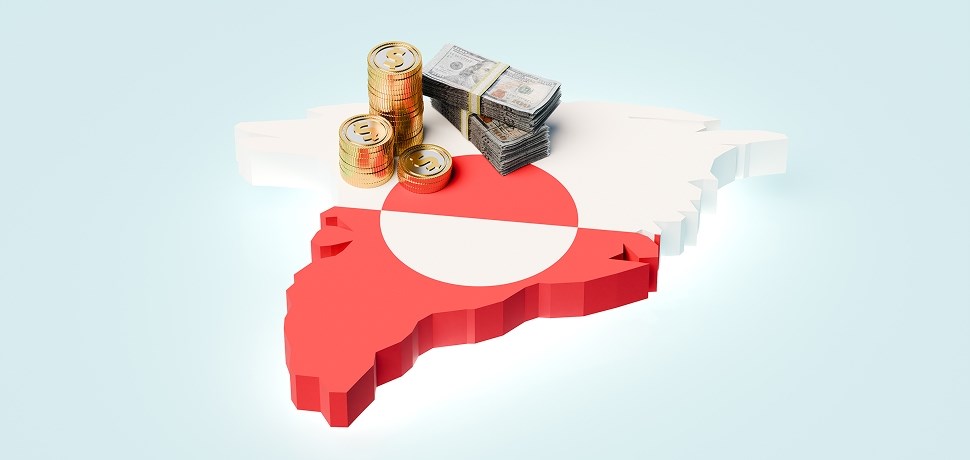
Greenland has rapidly shifted from a remote Arctic territory on the geopolitical periphery to a focal point of strategic competition, with implications that span security policy, alliance cohesion, resource economics, and long-horizon investment risk premia. For global capital allocators and sovereign risk analysts, understanding Greenland requires parsing the intersection of climate-driven accessibility, critical mineral potential, alliance politics, and economic feasibility.
Geostrategic context: A new Arctic chessboard
Greenland — an autonomous territory within the Kingdom of Denmark — sits astride the North Atlantic, overlooking key Arctic sea lanes and the GIUK (Greenland–Iceland–UK) gap, a chokepoint of transatlantic naval and aerial manoeuvres. Its strategic importance has drawn renewed attention in the context of great-power competition between the United States, Europe, Russia, and China.
In early 2026, U.S. political leadership publicly reignited the controversial notion that the United States should acquire Greenland — a proposal rooted in perceived security imperatives and access to strategic resources. This drive has been coupled with threats of tariffs on European Union countries, including Denmark, aimed at pressuring allies over Greenland’s governance, a move that has significantly strained transatlantic relations.
European governments have responded with united opposition, emphasising Greenland’s sovereignty and self-determination, and warning that such economic coercion threatens NATO cohesion. Joint statements and coordinated policy responses underscore a broader European strategic recalibration regarding Arctic defence and economic autonomy.
Resource potential: geological wealth vs. commercial viability
From an investment perspective, Greenland’s subsurface geology is compelling on paper. The territory hosts some of the world’s most significant rare earth and critical mineral occurrences, including rare earth oxides, nickel, copper and other commodities essential to energy transition and defence technologies. Projects such as Kvanefjeld — one of the largest undeveloped rare earth deposits globally — highlight this potential, with resource estimates exceeding 1 billion tonnes of rare earth oxides alongside significant associated elements.
Yet this geological promise confronts substantial economic and logistical headwinds. Infrastructure deficits — including the absence of road networks, constrained port capacity and limited power generation — materially raise the cost of Arctic mining. Capital expenditures for project build out may exceed those in other remote jurisdictions by 150 percent to 300 percent on a per unit basis. Regulatory frameworks, including Greenland’s stringent environmental and community engagement requirements, also extend development timelines.
Climate change: accessibility and risk externalities
Accelerated Arctic warming — occurring at nearly four times the global average — has rapidly diminished sea ice, opening new maritime routes and increasing accessibility to previously ice-bound regions. The melting permafrost and retreating ice shelves are pivotal in elevating Greenland’s strategic profile, by reducing barriers to exploration and potential extraction.
However, climate change also introduces operational risk. Seasonal windows for construction and extraction are limited, and unpredictable weather increases hazard exposure and logistical costs. From an ESG and risk-management perspective, these factors demand rigorous scenario modelling and temperature-driven operational adjustments.
Political economy: sovereignty, alliances, and market signals
Greenland’s political landscape complicates simplistic resource narratives. The territory’s leadership has publicly reaffirmed allegiance to Denmark and NATO, rejecting the transfer of sovereignty to the United States while signalling openness to strategic mineral cooperation under existing governance frameworks.
European involvement — manifested through multinational exercises such as Operation Arctic Endurance, in which NATO partners have deployed forces to Greenland — signals an emergent continental response to perceived U.S. assertiveness and broader Arctic security concerns.
For investors, this underscores a broader truth: sovereign and alliance dynamics materially shape risk premia. Greenland sits at the nexus of alliance politics and resource economics; shifts in governance or strategic postures could influence supply chain investments, sovereign credit assessments, and geopolitical risk pricing.
Narrative summary
The prevailing narrative in early 2026 is that Greenland has transitioned from a remote Arctic outpost to a flashpoint of international strategy. Its location, emerging accessibility, and resource potential make it a coveted piece of the global security puzzle. However, this is colliding with principles of sovereignty and alliance unity, generating tension between U.S. strategic ambitions and European, Danish, and Greenlandic insistence on self-determination. The situation exposes fault lines in transatlantic relations and highlights how climate change is not just an environmental phenomenon but a catalyst reshaping geopolitical priorities.
Sources:
Financial Times, Time, The Guardian, The Washington Post, Discovery Alert, Euronews, Wikipedia